Lawsuit says DHS agents used facial recognition and threatened to label Maine legal observers domestic terrorists
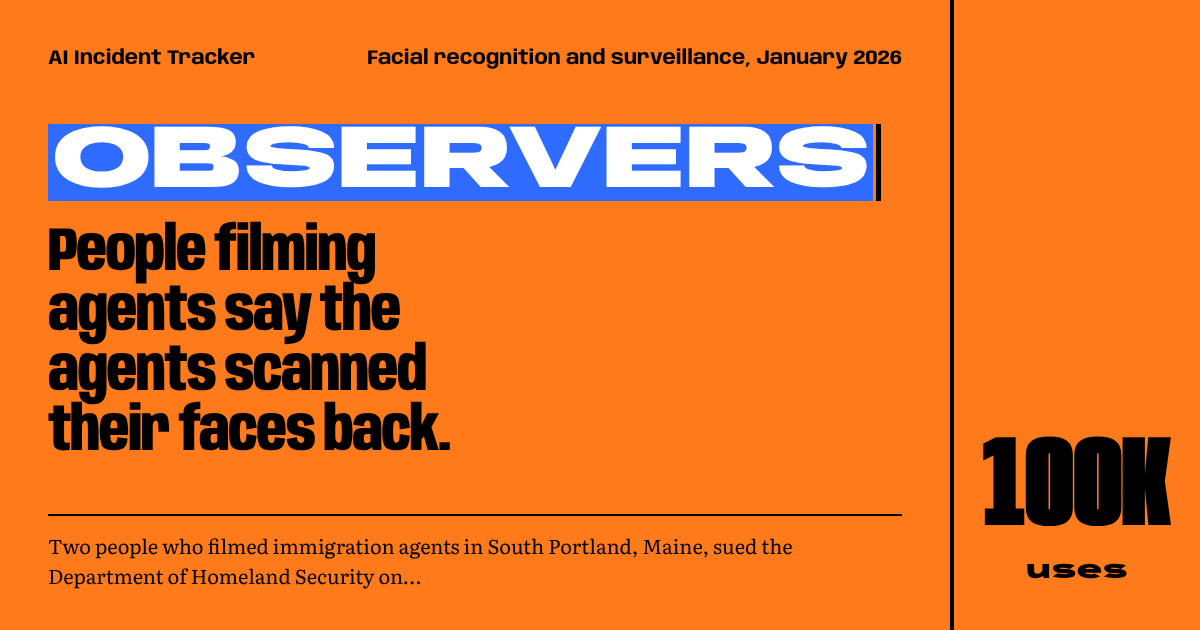
Two people who filmed immigration agents in South Portland, Maine, sued the Department of Homeland Security on February 23, 2026. They say agents scanned their faces and license plates with phones in January and threatened to add them to a domestic terrorist database. The suit cites DHS's Mobile Fortify facial recognition app. On March 23, a federal judge denied their request for an emergency order. DHS lawyers said neither woman was added to a database.
In late January 2026, DHS launched an immigration enforcement surge in Maine that it called Operation Catch of the Day. Residents who watched and recorded federal agents as legal observers say agents responded by recording them.
On February 23, two observers filed a proposed class action in the District of Maine against Homeland Security Secretary Kristi Noem and DHS. They allege that on January 21 and 23, agents in South Portland used phones to scan their faces and vehicle plates and threatened to add them to a domestic terrorist database. The complaint says DHS had reportedly used its Mobile Fortify facial recognition app more than 100,000 times in the field, and argues the scans were retaliation for activity the First Amendment protects.
DHS lawyers said records showed neither woman had been added to a database, though photos agents took of them still exist. ICE officials disavowed the agents' conduct and said they were looking at possible discipline. On March 23, Judge John Woodcock denied an emergency order, finding no evidence yet of a database of protesters and calling the requested order too broad. He said the suit raised serious constitutional issues. The observers filed an amended complaint in April and asked for a preliminary injunction in October 2026.
- Filed
- February 23, 2026
- Allegation
- Facial and plate scans of legal observers
- Tool named
- Mobile Fortify
- Claim
- First Amendment retaliation
How it unfolded
- Jan. 20, 2026
DHS announces an immigration surge in Maine.
- Jan. 21, 2026
Agents scan an observer's face and car, she says.
- Jan. 23, 2026
A second observer says the same happened to her.
- Feb. 23, 2026
The observers sue DHS.
- Mar. 23, 2026
The court denies an emergency order.
- Oct. 2, 2026
The observers ask for a preliminary injunction.
Provenance
Where each fact comes from, and what is still missing.
On the record
The complaint sets out the observers' account. The court's March 2026 order denied emergency relief, and the case continues.Not yet confirmed
Whether agents ran facial recognition on the observers, and what they kept, has not been decided in court. DHS says neither woman was added to a database. Send us a sourceSources
- News report
Bloomberg Law, March 24, 2026. Maine Protestors Lose Bid for Order Limiting ICE Data Collection. Read - First-hand account
Protect Democracy, October 2026. Defending Maine communities from federal surveillance and intimidation. Read - Court record
U.S. District Court for the District of Maine (via CourtListener), March 23, 2026. Order on Motion for Temporary Restraining Order, Hilton v. Noem. Read - News report
Scripps News, February 26, 2026. DHS accused of using surveillance technology to track legal observers. Read, archived copy - Official record
U.S. District Court for the District of Maine, February 23, 2026. Hilton v. Noem, No. 2:26-cv-00092, complaint. Read, archived copy - News report
NPR, February 23, 2026. A new lawsuit alleges DHS illegally tracked and intimidated observers. Read, archived copy - Incident index
AI Incident Database, January 21, 2026. AIID incident #1390. Read
Rewritten and checked Nov 24, 2026. First published Nov 19, 2026.
Status history
Changes to this exhibit's status, with the date and what changed it.
- Nov 24, 2026Written up in full and checked against the complaint, the court's March 2026 order, Bloomberg Law and plaintiffs' counsel's case page. Plaintiffs described without their names in the text. Status: official record.U.S. District Court for the District of Maine; U.S. District Court for the District of Maine (via CourtListener); Bloomberg Law; Protect Democracy
- Nov 19, 2026Imported from the AI Incident Database (incident 1390) with the reports it lists.AI Incident Database
- Nov 19, 2026Checked against the complaint in Hilton v. Noem, Scripps News and NPR and summarized in our own words.U.S. District Court for the District of Maine; Scripps News; NPR
Questions visitors ask
What is the Maine legal observers' lawsuit about?
Two people who filmed immigration agents in South Portland say agents scanned their faces and plates with facial recognition tools and threatened to treat them as domestic terrorists.
What is Mobile Fortify?
A DHS facial recognition app that the complaint says had been used more than 100,000 times in the field.
What has the court decided?
On March 23, 2026, it denied an emergency order, finding no evidence yet of a database of protesters. The case continues.
Take it with you
Share the cover
Cite this exhibit
AI Incident Tracker. (2026, November 24). Lawsuit says DHS agents used facial recognition and threatened to label Maine legal observers domestic terrorists (AIT-1515). https://aiincidenttracker.com/AIT-1515
Up next
More like this
See the room- Jan 9, 2025A Nebraska man was jailed after a Kentucky detective allegedly relied on a facial recognition match, and a judge let his lawsuit proceedFacial recognition and surveillance
- Nov 2022Madison Square Garden's facial recognition barred a lawyer from a Rockettes show over her firm's lawsuit, drawing an attorney general's warningFacial recognition and surveillance
- Dec 4, 2025UK Home Office tests found its police face-search tool gave more false matches for Black and Asian peopleFacial recognition and surveillance
- May 18, 2023Illinois Residents File Class Action Lawsuit Against Facial Recognition Technology Companies for Allegedly Violating BIPAFacial recognition and surveillance