South African court found that only two of nine cases cited by an Umvoti mayor's lawyers existed, and called relying on AI for research irresponsible
Lawyers for Umvoti mayor Philani Mavundla filed a supplementary notice of appeal in the Pietermaritzburg High Court in September 2024. Judge Elsje-Marié Bezuidenhout found that only two of its nine cited cases existed. The article clerk who drafted it denied using an AI tool such as ChatGPT. In a January 8, 2025 judgment, the judge refused leave to appeal and referred the matter to the Legal Practice Council.
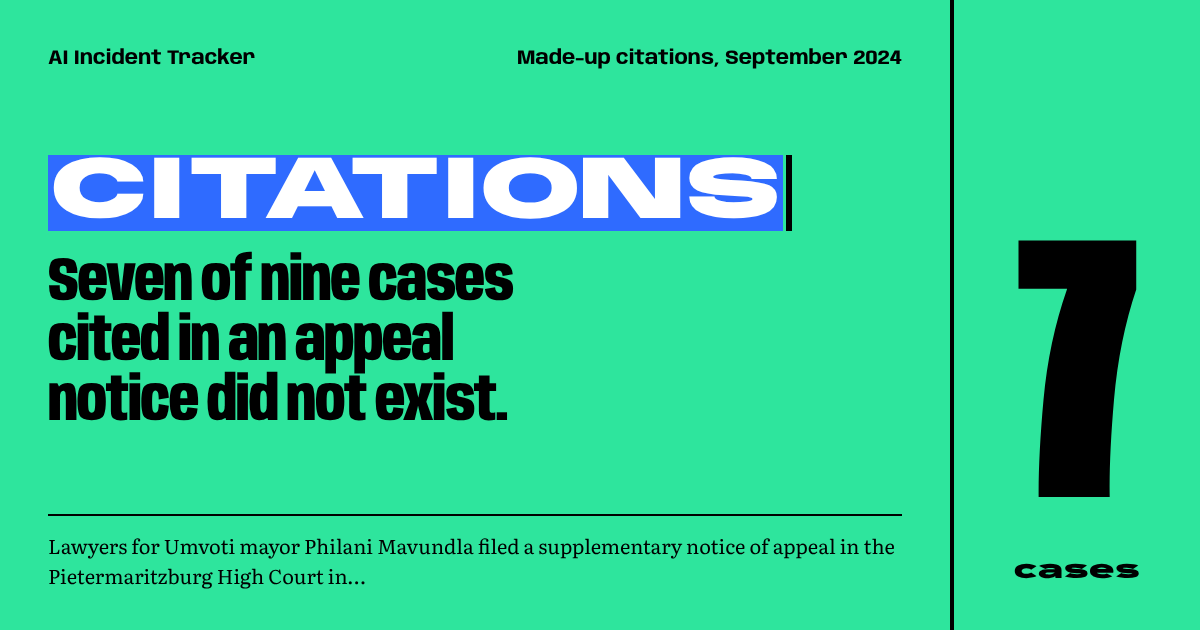
Philani Mavundla, mayor of Umvoti Local Municipality in KwaZulu-Natal, was fighting a decision of the provincial Department of Co-Operative Government and Traditional Affairs. After the court rescinded an order in his favour, his lawyers filed a supplementary notice of appeal on September 6, 2024. Judge Elsje-Marié Bezuidenhout could not find most of the authorities it relied on. Of nine cases cited, only two existed, and one of those carried a wrong citation.
Called to explain, the article clerk who drafted the notice said she had found the cases in law journals through her university portal but could not name them. She denied using an AI application such as ChatGPT. The firm's principal said the firm had no access to the law reports and had searched using Google. Counsel had relied on the citations without checking them.
In her January 8, 2025 judgment, the judge said she had put one of the citations to ChatGPT, which wrongly confirmed the case and described what it was about. She wrote that relying on AI technologies for legal research "is irresponsible and downright unprofessional." She refused leave to appeal, ordered the law firm to pay the costs of two September appearances itself and sent the judgment to the Legal Practice Council.
- Judgment
- 8 January 2025
- Authorities
- Nine cited, two found to exist
- Costs
- Law firm to pay two appearances itself
- Referral
- Legal Practice Council, KwaZulu-Natal
How it unfolded
- Sept. 6, 2024
An appeal notice cites cases that do not exist.
- Sept. 2024
The judge calls the lawyers to explain.
- Jan. 8, 2025
Leave to appeal is refused; the case is referred.
Provenance
Where each fact comes from, and what is still missing.
On the record
The court's judgment documents the false citations, the explanations given and the orders made.Not yet confirmed
Whether AI produced the citations was not established; the clerk who drafted the notice denied using it. Send us a sourceSources
- Official record
SAFLII, January 8, 2025. Mavundla v MEC: Department of Co-Operative Government and Traditional Affairs KwaZulu-Natal and Others (7940/2024P) [2025] ZAKZPHC 2. Read - Official record
High Court of South Africa, KwaZulu-Natal Division, Pietermaritzburg (via LawLibrary), January 8, 2025. Mavundla v MEC: Department of Co-Operative Government and Traditional Affairs KwaZulu-Natal and Others (7940/2024P) [2025] ZAKZPHC 2. Read - News report
IOL, January 9, 2025. Pietermaritzburg law firm under fire for “non-existent” case studies. Read, archived copy - News report
michalsons.com, March 31, 2025. Mavundla v MEC: Department of Co-Operative Government and Traditional Affairs KwaZulu-Natal | GenAI. Read, archived copy - News report
cliffedekkerhofmeyr.com, July 4, 2025. Another episode of fabricated citations, real repercussions: South African courts show no tolerance for AI-hallucinated cases. Read, archived copy - News report
Moonstone, January 13, 2025. AI in legal research under scrutiny after fake case citations. Read, archived copy - Incident index
AI Incident Database, September 20, 2024. AIID incident #1137. Read
Rewritten and checked Nov 25, 2026. First published Nov 19, 2026.
Status history
Changes to this exhibit's status, with the date and what changed it.
- Nov 25, 2026Written up in full and checked against the court's January 8, 2025 judgment, Moonstone and Michalsons. Title rewritten. Status: official record.High Court of South Africa, KwaZulu-Natal Division, Pietermaritzburg (via LawLibrary); SAFLII; Moonstone; michalsons.com
- Nov 20, 2026Checked against Michalsons and Moonstone and summarized in our own words.michalsons.com; Moonstone
- Nov 19, 2026Imported from the AI Incident Database (incident 1137) with the reports it lists.AI Incident Database
Questions visitors ask
What happened in Mavundla v MEC?
A South African judge found that only two of nine cases cited in a mayor's appeal notice existed, refused leave to appeal and referred the lawyers to the Legal Practice Council.
Was AI used to write the citations?
The court did not establish it. The article clerk who drafted the notice denied using ChatGPT, and the judge found ChatGPT itself wrongly confirmed one of the cases.
What did the judge say about AI?
She wrote that relying on AI technologies for legal research is irresponsible and unprofessional.
Take it with you
Share the cover
Cite this exhibit
AI Incident Tracker. (2026, November 25). South African court found that only two of nine cases cited by an Umvoti mayor's lawyers existed, and called relying on AI for research irresponsible (AIT-1282). https://aiincidenttracker.com/AIT-1282
In the data
DownloadsUp next
More like this
See the room- May 1, 2025Ontario lawyer who cited AI-invented cases in Ko v. Li was referred for criminal contempt and suspended for six monthsMade-up citations
- May 2023Colorado lawyer Zachariah Crabill was suspended after citing fake ChatGPT cases and blaming an internMade-up citations
- Mar 1, 2023Lawyers in Mata v. Avianca cited six court decisions ChatGPT invented and were fined $5,000Made-up citations
- Nov 2025Oklahoma judge admitted citing nonexistent cases found through ChatGPT in a custody order, investigators sayMade-up citations