A Rotorua supermarket wrongly told a Māori woman she was a trespassed thief during a facial recognition trial later found lawful
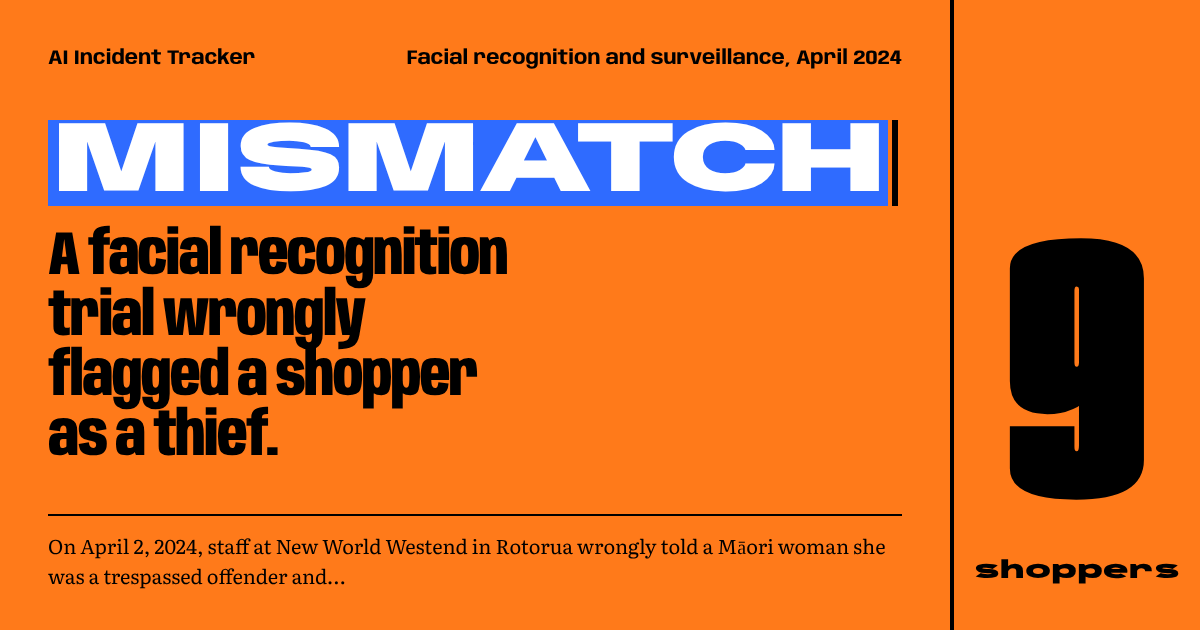
On April 2, 2024, staff at New World Westend in Rotorua wrongly told a Māori woman she was a trespassed offender and must leave. The store was one of 25 Foodstuffs North Island supermarkets trialling live facial recognition. Foodstuffs apologised and blamed human error. In June 2025 the Privacy Commissioner found the trial complied with the Privacy Act, but said bias against Māori and Pacific people could not be ruled out. RNZ reported nine misidentifications during the trial.
Foodstuffs North Island began trialling live facial recognition in 25 of its supermarkets on February 8, 2024. Cameras checked shoppers' faces against store watchlists of people of interest, and two trained staff were meant to verify any match before acting. On April 2, staff at New World Westend in Rotorua told a Māori woman she was a trespassed offender and must leave, though she said she showed three forms of identification.
Foodstuffs apologised and called it human error, and said it would report the case to the Privacy Commissioner, who had just opened an inquiry into the trial. The woman told the NZ Herald she felt racially discriminated against and embarrassed by the incident, which happened on her birthday.
The trial ended on September 7, 2024. In findings released on June 4, 2025, Privacy Commissioner Michael Webster said it complied with the Privacy Act. The system scanned 225,972,004 faces and raised 1,742 alerts, of which 1,208 were confirmed matches. Because the technology was developed overseas without New Zealand training data, he said, bias, including against Māori and Pacific people, could not be ruled out. RNZ reported nine cases in which staff approached a misidentified shopper, two of whom were asked to leave.
- Released
- 4 June 2025
- Trial
- 8 February to 7 September 2024, 25 supermarkets
- Faces scanned
- 225,972,004
- Alerts
- 1,742, of which 1,208 were confirmed matches
- Bias
- Impact on Māori and Pacific people cannot be fully ruled out
- Finding
- Complied with the Privacy Act
How it unfolded
- Feb. 8, 2024
The trial begins in 25 supermarkets.
- April 2, 2024
A woman is wrongly told to leave in Rotorua.
- April 2024
The Privacy Commissioner opens an inquiry.
- Sept. 7, 2024
The trial ends.
- June 4, 2025
The inquiry finds the trial complied with the law.
Provenance
Where each fact comes from, and what is still missing.
On the record
The Privacy Commissioner's findings confirm the trial's scale and that it complied with the Privacy Act, while warning that bias could not be ruled out.Not yet confirmed
The commissioner's summary does not say whether the Rotorua case is among the misidentifications counted during the trial. Send us a sourceSources
- Official record
Office of the Privacy Commissioner, June 2025. FRT Inquiry: summary of findings. Read - Official record
Office of the Privacy Commissioner, June 4, 2025. Inquiry into Foodstuffs North Island trial use of facial recognition technology. Read - News report
RNZ, June 4, 2025. Privacy commissioner inquiry finds supermarket facial recognition tech's use is justified. Read - News report
The New Zealand Herald, April 13, 2024. Supermarket facial recognition trial: Rotorua mother's "discrimination" ordeal. Read, archived copy - News report
1News, April 22, 2024. Rotorua mother wrongly identified by supermarket as a thief. Read - Incident index
AI Incident Database, April 2, 2024. AIID incident #665. Read
Rewritten and checked Nov 25, 2026. First published Nov 19, 2026.
Status history
Changes to this exhibit's status, with the date and what changed it.
- Nov 25, 2026Written up in full and checked against the Privacy Commissioner's inquiry findings and inquiry page, RNZ, the NZ Herald and 1News. Added the inquiry's outcome. Title rewritten. Status: official record.Office of the Privacy Commissioner; Office of the Privacy Commissioner; RNZ; The New Zealand Herald; 1News
- Nov 20, 2026Checked against The New Zealand Herald and 1News and summarized in our own words.The New Zealand Herald; 1News
- Nov 19, 2026Imported from the AI Incident Database (incident 665) with the reports it lists.AI Incident Database
Questions visitors ask
What happened at New World Westend in Rotorua?
On April 2, 2024, staff wrongly told a Māori woman she was a trespassed offender and must leave during a facial recognition trial. Foodstuffs apologised and blamed human error.
Was the Foodstuffs facial recognition trial legal?
The Privacy Commissioner found in June 2025 that the trial complied with the Privacy Act, pointing to the safeguards in place.
Is the system biased against Māori?
The commissioner said bias, including impacts on Māori and Pacific people, could not be fully ruled out because the technology lacked New Zealand training data.
Take it with you
Share the cover
Cite this exhibit
AI Incident Tracker. (2026, November 25). A Rotorua supermarket wrongly told a Māori woman she was a trespassed thief during a facial recognition trial later found lawful (AIT-0810). https://aiincidenttracker.com/AIT-0810
Up next
More like this
See the room- Jan 9, 2020Detroit police wrongly arrested Robert Williams after a facial recognition search matched his driver's license photoFacial recognition and surveillance
- Dec 4, 2025UK Home Office tests found its police face-search tool gave more false matches for Black and Asian peopleFacial recognition and surveillance
- Sep 15, 2025Kenya's High Court found the state broadcaster KBC unlawfully made staff clock in with facial recognition and ordered the data deletedFacial recognition and surveillance
- Jul 26, 2022UK regulator found Facewatch's store facial recognition breached data law but took no action, after a complaint over Southern Co-opFacial recognition and surveillance