Ninth Circuit suspended two immigration lawyers over briefs with nonexistent cases and denials of AI use
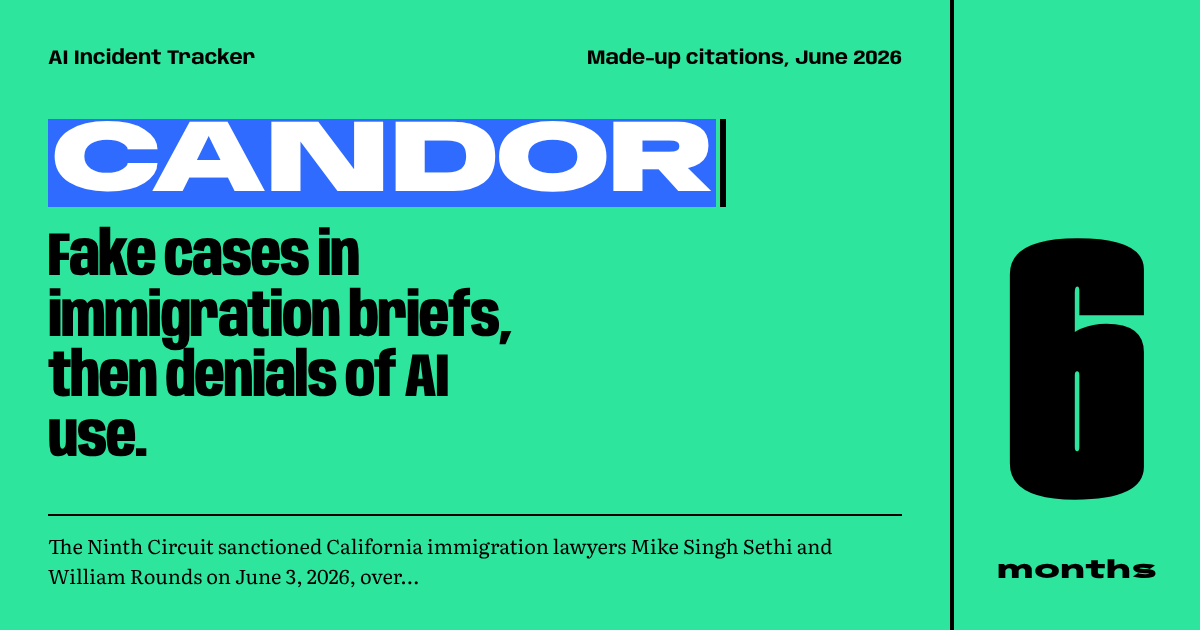
The Ninth Circuit sanctioned California immigration lawyers Mike Singh Sethi and William Rounds on June 3, 2026, over briefs that cited nonexistent cases and misquoted real ones. The lawyers had called the errors typographical and denied AI was involved, then conceded unlicensed brief writers probably misused generative AI. The court found they had violated their duty of candor. It fined each $2,500, suspended both from practice before the court for six months and required AI-use disclosures for two years, the ABA Journal reported.
Mike Singh Sethi and William Rounds, immigration lawyers in Orange, California, represented the petitioners in Lnu v. Blanche, an asylum appeal the Ninth Circuit later granted. Sethi's opening brief cited two cases that do not exist and attributed quotations to two real cases that do not contain them. The reply brief misquoted and mischaracterized other decisions, and the court found five more nonexistent cases in briefs in two of Sethi's other pending appeals.
Sethi filed a motion calling the errors typographical. At oral argument on October 20, 2025, Rounds told the court several times that AI was not used before conceding it was possible. In response to an order to show cause, the lawyers said it was more likely than not that unlicensed brief writers had used AI against firm policy, and that attorneys did not normally check those writers' citations.
On June 3, 2026, the court found both lawyers had knowingly or recklessly made false statements to it, and said it was sanctioning the inaccurate filings and the lack of candor, not AI use itself. It fined each $2,500, suspended both from practice before the Ninth Circuit for six months, and ordered them to tell clients and other courts. For two years their filings must state whether generative AI was used and certify that every citation is real. The court sent the order to the State Bar of California.
- Filed
- June 3, 2026
- Nonexistent cases
- Seven, across three appeals
- Fines
- $2,500 each
- Suspension
- Six months
- Disclosures
- Two years of AI-use statements
How it unfolded
- 2025
Briefs cite nonexistent cases and misquote real ones.
- Oct. 20, 2025
At oral argument, counsel says AI was not used.
- 2025
The court orders the lawyers to show cause.
- Jun. 3, 2026
The court fines and suspends both lawyers.
“Be aware of the risks of overreliance on generative AI.”
Provenance
Where each fact comes from, and what is still missing.
On the record
The court's published order sets out the fabricated citations, the lawyers' shifting explanations, its findings on candor and the sanctions.Not yet confirmed
Which AI tool the brief writers used is not in the sources we read. Send us a sourceSources
- News report
Reuters, June 3, 2026. US appeals court sanctions lawyers over AI ‘hallucinations,’ lack of candor. Read - Court record
U.S. Court of Appeals for the Ninth Circuit, June 3, 2026. LNU v. Blanche, No. 24-4790 (order). Read, archived copy - News report
Amanda Robert, ABA Journal, June 4, 2026. Attorneys' lack of candor over AI errors leads to stricter sanctions. Read, archived copy - Incident index
AI Incident Database, October 20, 2025. AIID incident #1571. Read
Rewritten and checked Nov 24, 2026. First published Nov 19, 2026.
Status history
Changes to this exhibit's status, with the date and what changed it.
- Nov 24, 2026Written up in full and checked against the Ninth Circuit's order and the ABA Journal. Status: official record.U.S. Court of Appeals for the Ninth Circuit; ABA Journal
- Nov 20, 2026Checked against the Ninth Circuit's order and the ABA Journal and summarized in our own words.U.S. Court of Appeals for the Ninth Circuit; ABA Journal
- Nov 19, 2026Imported from the AI Incident Database (incident 1571) with the reports it lists.AI Incident Database
Questions visitors ask
Why did the Ninth Circuit sanction Mike Sethi and William Rounds?
Their briefs cited nonexistent cases and misquoted real ones, and the court found they made false statements about the errors, first calling them typographical and denying AI use.
What were the sanctions?
Fines of $2,500 each, a six-month suspension from practice before the Ninth Circuit, notice to clients and courts, two years of AI-use disclosures, and referral to the State Bar of California.
Did the court punish the use of AI itself?
No. It said it was sanctioning the inaccurate filings and the lack of candor, not the use of AI.
Take it with you
Share the cover
Cite this exhibit
AI Incident Tracker. (2026, November 24). Ninth Circuit suspended two immigration lawyers over briefs with nonexistent cases and denials of AI use (AIT-1661). https://aiincidenttracker.com/AIT-1661
In the data
DownloadsUp next
More like this
See the room- Apr 3, 2026Sixth Circuit removed a court-appointed lawyer whose CoCounsel-drafted briefs contained false quotationsMade-up citations
- Mar 13, 2026Sixth Circuit fined two lawyers $15,000 each over fake citations in their Whiting v. City of Athens briefsMade-up citations
- Dec 18, 2025Fifth Circuit fined a lawyer $2,500 after finding she used AI to draft a reply brief with fabricated quotationsMade-up citations
- May 1, 2025Ontario lawyer who cited AI-invented cases in Ko v. Li was referred for criminal contempt and suspended for six monthsMade-up citations