UK health department said bots sent 90,835 of 118,756 responses to its smoking and vaping consultation
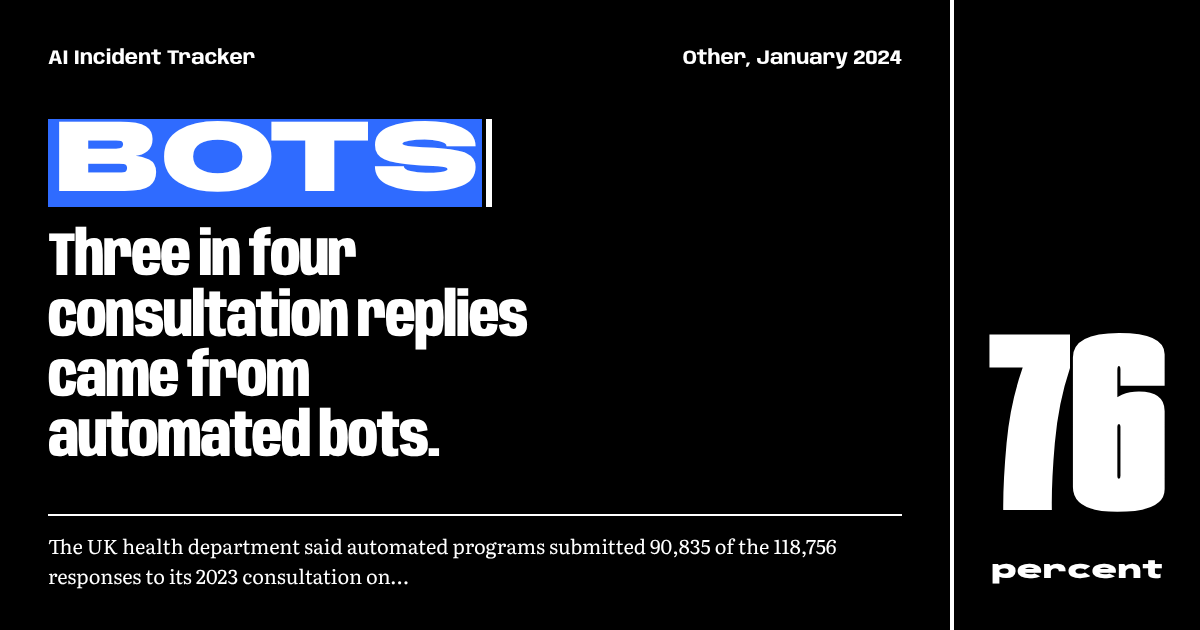
The UK health department said automated programs submitted 90,835 of the 118,756 responses to its 2023 consultation on creating a smokefree generation and tackling youth vaping. It excluded them from its analysis. In October 2026, a Tobacco Control study by researchers at the universities of Edinburgh and Bath found that the bot responses overwhelmingly opposed restricting disposable vapes. They could not say who was behind the campaign.
The UK government and the devolved administrations consulted the public from October 12 to December 6, 2023, on creating a smokefree generation, tackling youth vaping and enforcement. They received 118,756 responses. The Department of Health and Social Care identified 90,835 of them as submitted by automated means and excluded them, analysing the remaining 27,921.
The government's response, published on January 29, 2024, said a large majority of responses supported the smokefree generation plan, and the government went ahead with measures on tobacco and vapes.
In a study published in Tobacco Control on October 27, 2026, researchers at the University of Edinburgh and the University of Bath examined the published consultation reports and data obtained through freedom of information requests. They found that nearly all the bot responses targeted a single multiple-choice question and opposed restrictions on disposable vape sales, and that the same number said they had learned of the consultation through social media. With the bots excluded, most valid respondents supported the restrictions.
The researchers said the commercial origins of the campaign could not be established, while noting that tobacco companies had swamped earlier consultations with mass-recruited responses. The available evidence shows large-scale automated submissions; it does not establish that generative AI wrote them.
- Consultation
- 12 October to 6 December 2023
- Responses
- 118,756
- Identified as automated
- 90,835
- Analysed
- 27,921
How it unfolded
- Oct. 12, 2023
The consultation opens.
- Dec. 6, 2023
It closes with 118,756 responses.
- Jan. 29, 2024
The government publishes its response, excluding 90,835 automated ones.
- Oct. 27, 2026
A Tobacco Control study details what the bots targeted.
“not possible to ascertain the commercial origins of such a campaign”
Provenance
Where each fact comes from, and what is still missing.
On the record
The government's own figures confirm 90,835 automated responses were identified and excluded. The Tobacco Control study confirms what they targeted.Not yet confirmed
Who ran the bots, and whether generative AI wrote the responses, are not established in the sources we read. Send us a sourceSources
- Official record
Scottish Parliament, January 26, 2024. Publication of 4-nation consultation response on Smoke Free Generation. Read - News report
University of Bath, October 28, 2026. Study documents attempt at large-scale bot interference in a public health consultation. Read - News report
The Guardian, October 27, 2026. AI bots flooded 2023 UK government consultation on disposable vapes ban. Read - Official record
Department of Health and Social Care, January 29, 2024. Creating a smokefree generation and tackling youth vaping consultation: government response. Read - News report
BMJ Group, October 27, 2026. 3 out of 4 responses to UK smoke-free generation consultation were AI bot-generated. Read - News report
Press Association, October 27, 2026. Majority of responses to consultation on smoking Bill 'generated by AI bots'. Read - Incident index
AI Incident Database, January 29, 2024. AIID incident #1790. Read
Rewritten and checked Nov 24, 2026. First published Nov 19, 2026.
Status history
Changes to this exhibit's status, with the date and what changed it.
- Nov 24, 2026Written up in full and checked against the government's consultation response, a Scottish Government letter to the Scottish Parliament, the BMJ Group and University of Bath releases on the Tobacco Control study, and the Press Association. Status: official record.Department of Health and Social Care; Scottish Parliament; BMJ Group; University of Bath; Press Association
- Nov 20, 2026Checked against the Department of Health and Social Care, BMJ Group and the Press Association and summarized in our own words.Department of Health and Social Care; BMJ Group; Press Association
- Nov 19, 2026Imported from the AI Incident Database (incident 1790) with the reports it lists.AI Incident Database
Questions visitors ask
How many responses to the UK vaping consultation were bots?
The Department of Health and Social Care identified 90,835 of 118,756 responses, about 76 percent, as submitted by automated means and excluded them.
What were the bots trying to do?
A 2026 study in Tobacco Control found that nearly all of them targeted one question and opposed restrictions on disposable vape sales.
Who was behind the bots?
The researchers said the commercial origins of the campaign could not be established.
Take it with you
Share the cover
Cite this exhibit
AI Incident Tracker. (2026, November 24). UK health department said bots sent 90,835 of 118,756 responses to its smoking and vaping consultation (AIT-1880). https://aiincidenttracker.com/AIT-1880
Up next
More like this
See the room- Sep 2, 2025Kenyan MPs said overreliance on AI at the Social Health Authority led to unjust denials of hospital claimsOther
- Oct 2024Investigation says Kenya's AI means test for public health insurance overcharged poor householdsOther
- Sep 19, 2024Database handled by agentic AI firm Serviceaide exposed data of about 483,000 Catholic Health patientsOther
- Jul 2026State Department map at AIDS 2026 conference misplaced six African countries and reportedly bore an OpenAI watermarkOther