AI accessibility overlays were sold as making sites compliant; the FTC later ordered accessiBe to pay $1 million
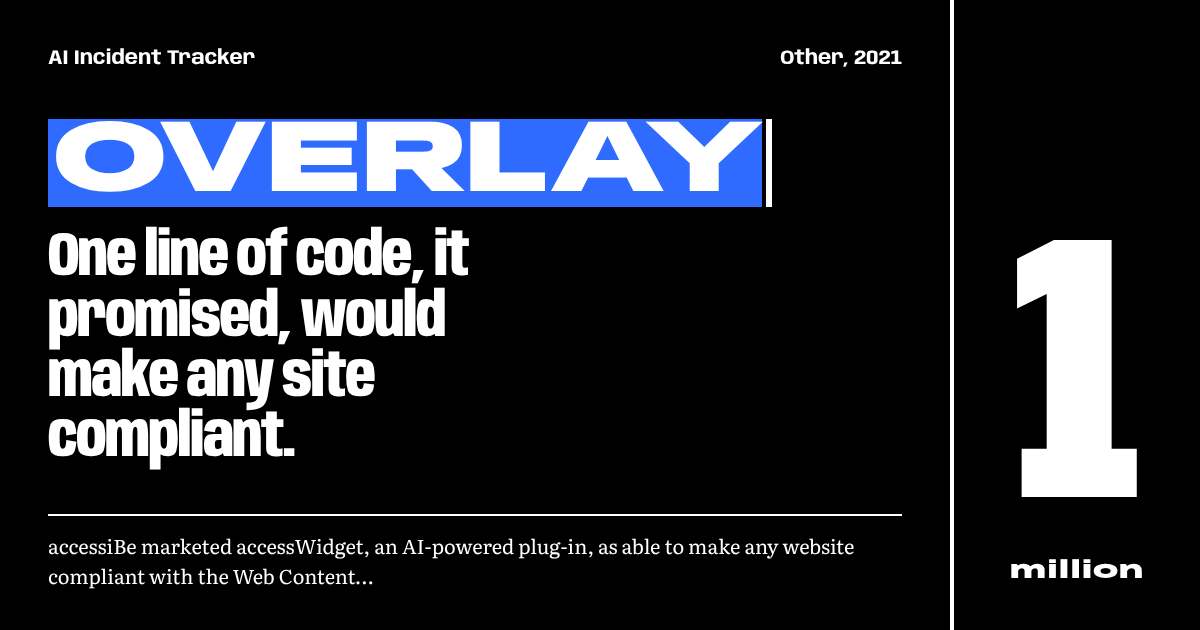
accessiBe marketed accessWidget, an AI-powered plug-in, as able to make any website compliant with the Web Content Accessibility Guidelines with one line of code. Blind users and advocates said it did not work, and in 2021 hundreds signed an open letter against such overlays. In January 2025 the FTC alleged accessiBe's claims were false or unsubstantiated and that it disguised paid reviews as independent. A final order in April 2025 required it to pay $1 million.
accessiBe sold accessWidget, a plug-in that website owners add with one line of code. The company advertised it as using AI to make any website compliant with the Web Content Accessibility Guidelines, the main international standard for web accessibility, and said it rescanned sites every 24 hours to keep them compliant.
People who rely on screen readers and other assistive technology said the tool did not deliver. In 2021 the National Federation of the Blind criticized accessiBe's marketing, and some 400 blind people, advocates and developers signed an open letter against accessibility overlays, TechCrunch reported.
On January 3, 2025, the FTC announced a complaint alleging that accessWidget did not make all user websites WCAG-compliant, so the company's claims were false, misleading or unsubstantiated. It also alleged accessiBe had paid for articles and reviews formatted to look like independent opinions, without disclosing its connection to them.
The FTC approved a final order in April 2025. It bars accessiBe from claiming its automated products can make any website WCAG-compliant or keep it compliant unless it has evidence, requires it to disclose material connections to reviewers, and requires it to pay $1 million, which may be used for refunds.
- Complaint
- January 3, 2025
- Final order
- April 2025
- Payment
- $1 million
- Barred claim
- That automated tools make any site WCAG-compliant, without evidence
How it unfolded
- 2021
Blind users and advocates criticize overlay claims.
- Jan. 3, 2025
The FTC announces its complaint and proposed order.
- Apr. 22, 2025
The FTC approves the final order.
“the #1 fully automated ADA and WCAG compliance solution”
Provenance
Where each fact comes from, and what is still missing.
On the record
The FTC's complaint and final order set out the claims, the allegations about paid reviews and the order's terms.Not yet confirmed
How many websites relied on accessWidget, and how much the $1 million will return to customers, is not in the sources we read. Send us a sourceSources
- Official record
Federal Trade Commission, January 3, 2025. Complaint, In the Matter of accessiBe, Inc.. Read - Official record
Federal Trade Commission, January 3, 2025. Concurring Statement of Commissioner Andrew N. Ferguson, In the Matter of accessiBe, Inc.. Read - News report
overlayfalseclaims.com, December 5, 2021. Website Accessibility Overlay False Claims. Read - News report
TechCrunch, January 3, 2025. FTC orders AI accessibility startup accessiBe to pay $1M for misleading advertising. Read - Official record
Federal Trade Commission, April 22, 2025. FTC Approves Final Order Requiring accessiBe to pay $1 Million. Read - Incident index
AI Incident Database, November 21, 2021. AIID incident #148. Read
Rewritten and checked Nov 24, 2026. First published Nov 19, 2026.
Status history
Changes to this exhibit's status, with the date and what changed it.
- Nov 24, 2026Written up in full and checked against the FTC's complaint, final order and Commissioner Ferguson's statement, and TechCrunch. Status: official record.Federal Trade Commission
- Nov 23, 2026Checked against TechCrunch and the Federal Trade Commission and summarized in our own words.TechCrunch; Federal Trade Commission
- Nov 19, 2026Imported from the AI Incident Database (incident 148) with the reports it lists.AI Incident Database
Questions visitors ask
What did the FTC say accessiBe did wrong?
It alleged accessiBe falsely claimed its AI-powered accessWidget could make any website WCAG-compliant, and that it paid for articles and reviews formatted to look independent without disclosing the connection.
What does the FTC order require?
accessiBe must pay $1 million, may not claim its automated products can make any website WCAG-compliant or keep it compliant without evidence, and must disclose material connections to reviewers.
Can an overlay make a website accessible?
The FTC found accessWidget did not make all user websites WCAG-compliant. Blind users and advocates have argued that overlays do not fix underlying accessibility problems.
Take it with you
Share the cover
Cite this exhibit
AI Incident Tracker. (2026, November 24). AI accessibility overlays were sold as making sites compliant; the FTC later ordered accessiBe to pay $1 million (AIT-0303). https://aiincidenttracker.com/AIT-0303
Up next
More like this
See the room- Sep 4, 2024North Carolina man was sentenced to prison for using AI songs and bots to collect millions in streaming royaltiesOther
- Jul 7, 2018Uber drivers dismissed over fraud flags won a Dutch appeal that called Uber's human review symbolic, and Uber later faced penaltiesOther
- Nov 2013Target's security team did not act on automated malware alerts before hackers took data on 40 million cards, a Senate staff report foundOther
- Jul 29, 2026New Jersey fined DataOne $1.07 million for running 62 unpermitted gas generators at its Vineland AI data centerOther