USCIS software called ATLAS automatically screens immigration cases against government databases and can start reviews that lead to denaturalization
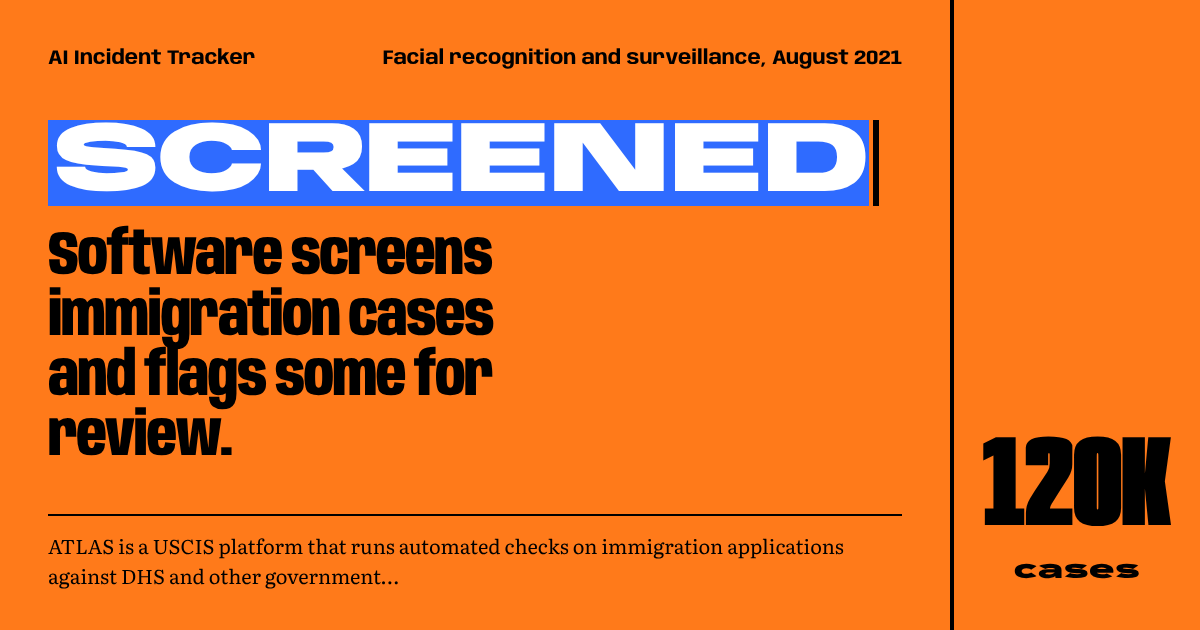
ATLAS is a USCIS platform that runs automated checks on immigration applications against DHS and other government databases. It applies predefined rules and pattern-based algorithms and sends flags to fraud officers for review. A 2020 DHS privacy assessment called the risk of false positives mitigated but redress only partly so. The Intercept reported in 2021 that ATLAS ran 16.5 million screenings in 2019, and that flags could lead to referrals to revoke citizenship.
U.S. Citizenship and Immigration Services built ATLAS to automate checks on people applying for immigration benefits, including naturalization. According to the Department of Homeland Security's 2020 privacy impact assessment, it sends applicants' information to systems such as CBP's TECS and Automated Targeting System and the DHS biometric database IDENT. It then filters the results through predefined rules and pattern-based algorithms to look for potential fraud, public safety or national security concerns.
When a rule matches, ATLAS creates a system-generated notification for the Fraud Detection and National Security directorate. A trained officer reviews it, and if it is actionable the directorate opens an administrative investigation. Findings can go to adjudicators or be referred to ICE. The assessment rated risks such as false positives as mitigated, but redress and the handling of specially protected applicants only partly mitigated.
In August 2021 The Intercept, citing documents obtained by two advocacy groups, reported that ATLAS ran 16.5 million screenings in 2019 and flagged more than 120,000 cases. It said a flag can feed a referral to strip a naturalized person's citizenship. Advocates warned the rules could disproportionately affect some communities; USCIS declined to answer the outlet's questions.
- Dated
- October 30, 2020
- Method
- Rules and pattern-based algorithms flag concerns
- Next step
- Officer review, then possible investigation
- Redress risk
- Rated only partly mitigated
How it unfolded
- 2016
DHS describes ATLAS as a screening module.
- Oct. 30, 2020
DHS publishes the ATLAS privacy assessment.
- Aug. 25, 2021
The Intercept reports on ATLAS and denaturalization.
Provenance
Where each fact comes from, and what is still missing.
On the record
DHS's privacy impact assessment confirms how ATLAS screens applications, what it checks and how flags lead to investigations.Not yet confirmed
How many ATLAS flags led to denaturalization referrals, and whether the rules weigh on some groups more, has not been published. Send us a sourceSources
- Official record
U.S. Department of Homeland Security (via ACLU court exhibit), May 18, 2016. Privacy Impact Assessment for the Fraud Detection and National Security Data System (FDNS-DS), DHS/USCIS/PIA-013(a). Read - Official record
U.S. Department of Homeland Security (via AILA), October 30, 2020. Privacy Impact Assessment for ATLAS, DHS/USCIS/PIA-084. Read - News report
Sam Biddle and Maryam Saleh, The Intercept, August 25, 2021. Little-Known Federal Software Can Trigger Revocation of Citizenship. Read - News report
Tom McKay, Gizmodo, August 26, 2021. U.S. Government Is Using an Algorithm to Flag American Citizens for Denaturalization: Report. Read - Incident index
AI Incident Database, August 26, 2014. AIID incident #260. Read
Rewritten and checked Nov 25, 2026. First published Nov 19, 2026.
Status history
Changes to this exhibit's status, with the date and what changed it.
- Nov 25, 2026Written up in full and checked against DHS's 2020 ATLAS privacy impact assessment, its 2016 FDNS-DS assessment, The Intercept and Gizmodo. Date changed to The Intercept's August 2021 report. Title rewritten. Status: official record.U.S. Department of Homeland Security (via AILA); U.S. Department of Homeland Security (via ACLU court exhibit); The Intercept; Gizmodo
- Nov 21, 2026Checked against The Intercept and Gizmodo and summarized in our own words.The Intercept; Gizmodo
- Nov 19, 2026Imported from the AI Incident Database (incident 260) with the reports it lists.AI Incident Database
Questions visitors ask
What is USCIS ATLAS?
A USCIS platform that automatically checks immigration applications against government databases and flags potential fraud, public safety or national security concerns.
Can ATLAS lead to loss of citizenship?
The Intercept reported that its flags can feed referrals to revoke a naturalized person's citizenship; DHS says flags go to officers for review first.
How many cases does ATLAS screen?
The Intercept reported 16.5 million screenings in 2019, with more than 120,000 cases flagged.
Take it with you
Share the cover
Cite this exhibit
AI Incident Tracker. (2026, November 25). USCIS software called ATLAS automatically screens immigration cases against government databases and can start reviews that lead to denaturalization (AIT-0413). https://aiincidenttracker.com/AIT-0413
Up next
More like this
See the room- Jun 1, 2023Former Costa Mesa officer pleaded guilty after using Flock cameras and police databases to track a womanFacial recognition and surveillance
- 2019South Korea let private firms train an AI tracking system on about 170 million immigration face images, then ended the project after an outcryFacial recognition and surveillance
- Dec 2021Bucheon, South Korea, planned to trace COVID-19 cases with facial recognition on CCTV, drawing privacy concernsFacial recognition and surveillance
- Nov 19, 2025Georgia investigators arrested Braselton's police chief on charges of using plate reader cameras to stalk peopleFacial recognition and surveillance